

Last Updated: November 15, 2026
Quick Summary
Custom nature art prints turn your own photographs of woodland paths, coastlines or hillsides into wall art. Start with a clear, high-resolution image, choose a size that suits the wall, and pick a finish that matches the scene.
- Pick photos with a clear subject, such as a single tree or a distinct ridge.
- For A3 and larger prints, aim for at least 3000 pixels on the longest side.
- Always work from the original file, not one recompressed by messaging apps.
- Use A3 for most landscapes, and reserve A2 for strong, high-resolution images.
- Hang a gallery wall with roughly 5 to 7 cm between frames, centred near 150 cm.
Table of Contents
- Why Custom Nature Art Prints Make Such Personal Wall Art
- Choosing the Right Nature Photo for Your Print
- Photo Resolution for Large Prints
- How to Prepare Photos for Printing
- Photo Print Sizes and Formats to Consider
- Planning a Nature Gallery Wall
- Ordering Your Custom Print From Bella Leaf Studio
- Frequently Asked Questions
Why Custom Nature Art Prints Make Such Personal Wall Art
A print made from your own photograph carries a memory that a shop-bought picture cannot. Custom nature art prints turn the woodland path you walked every weekend or the hillside you saw at sunrise into a feature of the room, not a generic scene.
Personal nature prints also suit many spaces. A living room, a home office or a hallway can all carry a single image that ties the room together.
Choosing the Right Nature Photo for Your Print
Not every holiday snapshot makes a good print. Start with images that have a clear subject, such as a single tree, a coastline or a distinct mountain ridge, rather than a busy scene with many small details that will blur when enlarged.
Consider how the image will sit on the wall. Soft skies, gentle gradients and open space work well for calm rooms. Strong colours and high contrast suit bold, modern interiors. Check the photo at the size you plan to print it, because what looks sharp on a phone can look soft on a large wall. You can see how a finished botanical-style result looks in the Eucalyptus Watercolour Art Print.
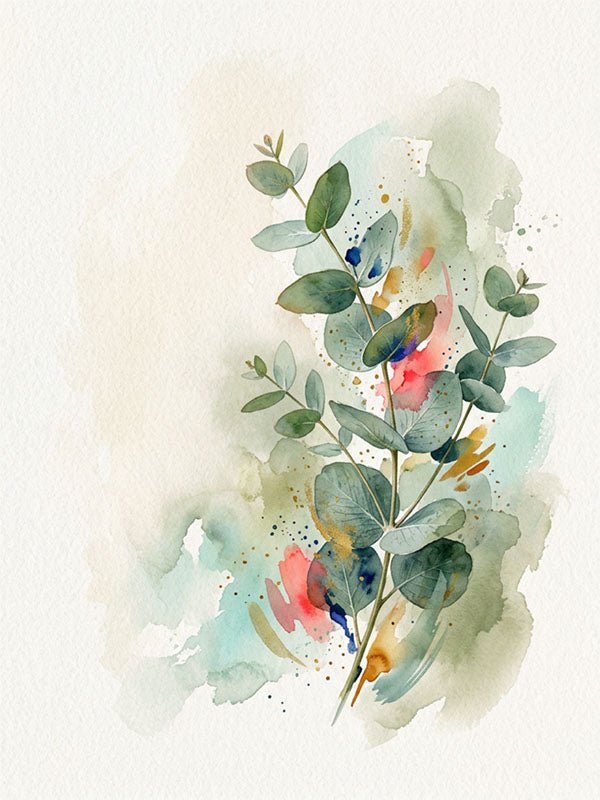
Photo Resolution for Large Prints
Resolution is the detail a photo contains, usually measured in pixels. For large prints, the pixel count matters more than the file size. A photo that looks fine on a screen can show visible pixelation when printed at A2 or larger.
As a practical guide, aim for the longest side of the image to be at least 3000 pixels for prints of A3 and above. Photos taken on modern phones often meet this, but images downloaded from social media are usually compressed and may fall short. Use the original file wherever you can.
If your photo is smaller than you need, avoid stretching it. Choose a smaller print size instead, which keeps the image sharp.
How to Prepare Photos for Printing
1. Start from the original file. Copy the image directly from your camera's memory card or your phone's camera roll. Files received through messaging apps, social media or email are usually recompressed and stripped of detail, and that loss cannot be recovered later. If the only copy you have came through a chat thread, ask the sender for the original.
2. Check resolution against your intended print size. Print resolution is usually described in dots per inch (dpi). Larger prints need more pixels, so check that your photo has enough detail for the size you choose.
3. Set the aspect ratio before you crop. Print sizes have fixed proportions, and a phone photo is rarely the same shape. Decide the final shape first, then crop to it.
6. Save in a print-friendly format. Keep the original untouched as a master copy and export a separate print version.
Photo Print Sizes and Formats to Consider
Size and finish work together. The guidance below pairs sizes with the nature subjects they suit, then compares materials by how they treat foliage, water, skies and texture.
Choosing a size
- A5 (148 × 210 mm): best for close-up detail, a single leaf, a feather, a shell, or as part of a grouped display. At this size, fine texture reads well but wide landscapes lose impact.
- A4 (210 × 297 mm): a versatile size for a single subject or a small grouping. Good for woodland paths and garden scenes where the viewer stands close.
- A3 (297 × 420 mm): the sweet spot for most landscapes. Wide vistas, coastlines and mountain ridges gain presence without demanding a huge wall.
- A2 (420 × 594 mm): a statement size for a feature wall. Reserve it for images with strong composition and plenty of resolution, because every softness is magnified.
Comparing materials for nature imagery
- Matt: soft, modern and non-reflective.
- Satin: a gentle sheen with balanced contrast.
- Gloss: vibrant, crisp and reflective.
- Framed or unframed: framed prints come in black, white or oak-effect frames with crystal-clear acrylic glazing; unframed prints are also available.
Matching finish to subject
A common pattern is to pair soft, misty woodland and muted garden scenes with matt paper, and to use satin or gloss for coastlines, water and skies where a little sheen adds depth. Bold, high-contrast images hold up well on acrylic or under glazing, while broad, atmospheric landscapes suit canvas. If you are unsure, matt fine art paper is the safest all-round choice for nature imagery because it flatters texture and avoids glare.
Planning a Nature Gallery Wall
A gallery wall of nature prints works best when the pieces share a palette or a frame style. For more ideas, browse these unique nature art prints. Mixing a few personal photos with a consistent frame colour creates cohesion even when the subjects differ.
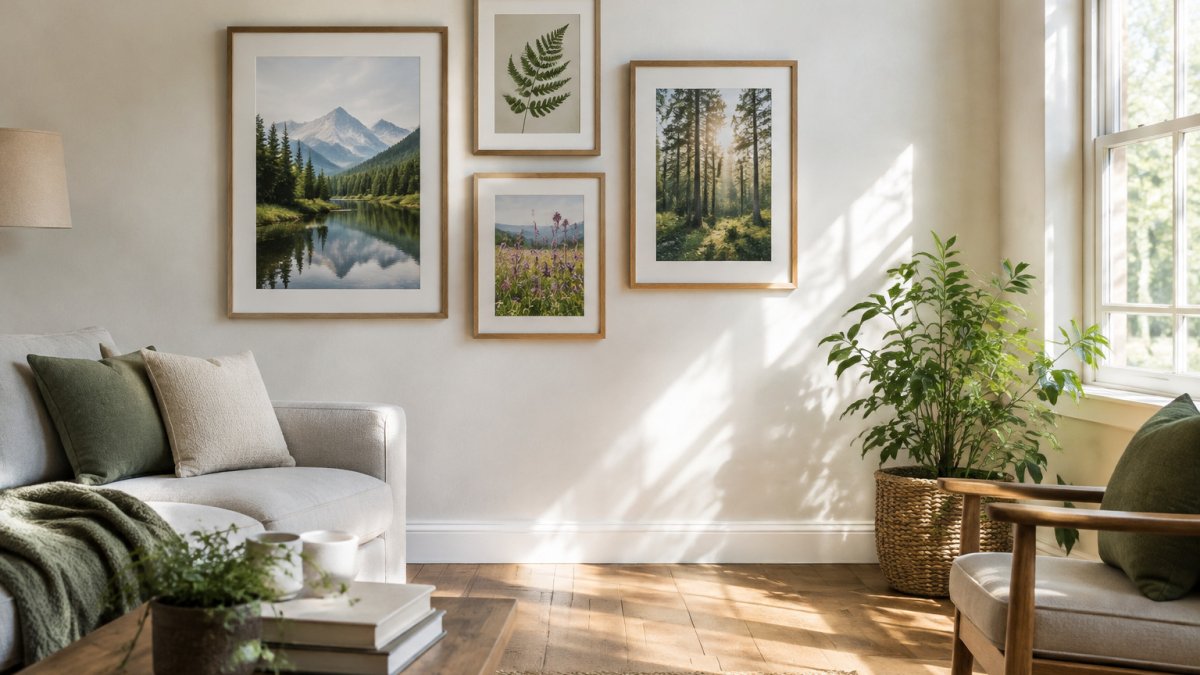
Lay the prints out on the floor before hanging them. For guidance on grouping countryside-style prints, read how to arrange countryside art prints on a gallery wall. Start with the largest piece as an anchor, then add smaller prints around it. Leave roughly equal gaps between frames, usually 5 to 7 cm, so the group reads as one display.
Hang the centre of the arrangement at about eye level, which is roughly 150 cm from the floor. Good natural light across the wall will show the colours of your prints at their best.
For a cohesive display, the Soft Earthy Botanical Watercolour style Art Print - Neutral Abstract Leaves pairs well with calm, neutral photo prints, while the Abstract Leaf Print - Expressive Botanical Wall Art suits a bolder arrangement.
Ordering Your Custom Print From Bella Leaf Studio
When you are ready to order, start with the Custom Art Print product page, which is where Bella Leaf Studio's custom artwork is created from your own images. Bella Leaf Studio's custom artwork is priced at £49 for an A4 print, £69 for an A3 print and £89 for an A2 print.
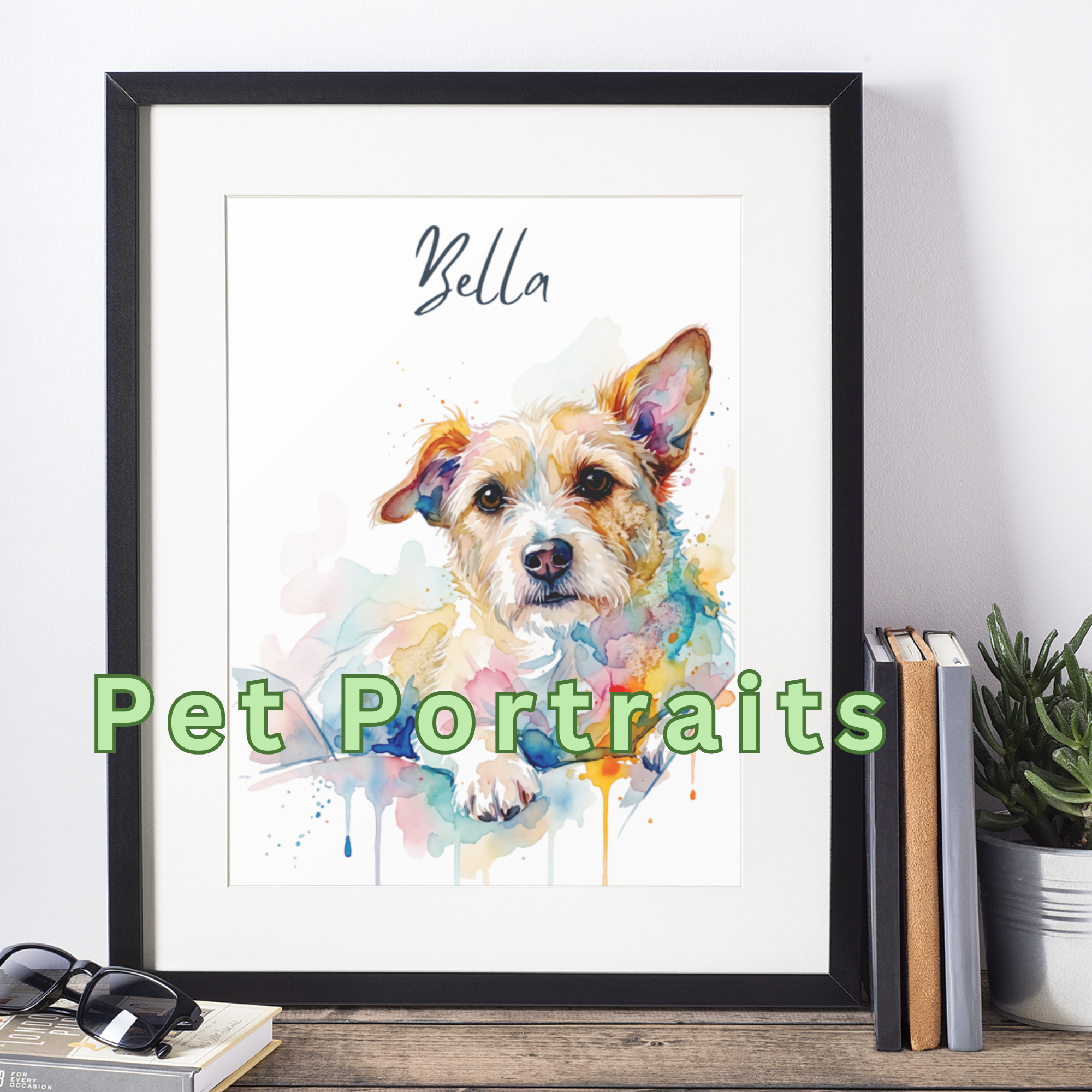
Before ordering, have your chosen photo ready in its highest resolution, note the size and finish you want, and decide whether you would like a framed or unframed print. Customers can then email their photographs to support@bellaleafstudio.com with their order number and follow the steps shown on the product page to complete the order.
Bella Leaf Studio's art is professionally printed on premium fine art paper and carefully packaged for delivery.
The article gives the following prices and steps for ordering a custom print from Bella Leaf Studio.
| Item | Value | Note |
|---|---|---|
| A4 print | £49 | Custom artwork from your own image |
| A3 print | £69 | Custom artwork from your own image |
| A2 print | £89 | Custom artwork from your own image |
| Order step | Send photo | Email to support@bellaleafstudio.com with order number |
| Before ordering | Highest resolution photo | Note size, finish and framing choice |
Frequently Asked Questions
How do I turn my own nature photos into art prints?
Start with a sharp, well-exposed photo of a landscape, woodland, seascape or wildlife scene. Email the photograph to support@bellaleafstudio.com with your order number, and choose a size that suits the wall. Bella Leaf Studio's custom artwork service starts at £49.00 for an A4 print, which includes a proof for approval before printing on premium fine art paper.
What resolution should a photo be for a large print?
Check that the original file has enough detail for the size you have chosen. A photo that looks crisp on a phone screen may look soft when enlarged to A2, so if the file is small, choose a smaller size.
What print size should I choose for a landscape photo?
Match the print size to the wall space and the shape of your photo. Landscape images often suit A3 or A2 above a sofa, while a smaller A4 works well in a hallway or home office. Bella Leaf Studio's custom artwork is available as an A4 print at £49.00, an A3 print at £69.00 or an A2 print at £89.00, so you can compare sizes before you commit.
Which nature photos work best as wall art?
Images with a clear focal point, strong light and uncluttered edges tend to print well. Sweeping coastlines, single trees, woodland paths and close-up leaf textures often make striking wall art. Avoid photos that are heavily compressed, very dark in the corners or taken in poor light, as these can lose detail once printed at a larger size.
Bella Leaf Studio custom print prices
