

Last Updated: 28 October 2026
Quick Summary
Yes, you can hang large art above a bed, and it often looks better than a small piece floating mid-wall. Leave about 15 to 25 centimetres between the top of the headboard or mattress and the bottom of the frame.
- Measure from the top of the headboard, not the floor.
- Aim for 15 to 25 centimetres of space below the frame.
- Cover roughly two-thirds to three-quarters of the bed's width.
- Test the position with painter's tape before drilling any holes.
- Check heavy fixings after a week, as they can loosen over time.
Table of Contents
- How High to Hang Art Above a Bed
- Choosing the Right Art Size Above a Bed
- Measuring and Marking the Wall Before You Drill
- Hanging Methods and Their Trade-offs
- How to Hang a Heavy Picture Above a Bed Safely
- Planning a Gallery Wall Above Your Bed
- Booking Your Bella Leaf Studio Triptych for the Wall Above Your Bed
- Frequently Asked Questions
How High to Hang Art Above a Bed
Yes, you can hang large art above a bed, and learning how to hang large art there often looks better than a small piece floating in the middle of the wall. The trick is getting the height right so the art feels connected to the bed rather than stuck on the ceiling.
A common guideline is to leave about 15 to 25 centimetres between the top of the headboard or mattress and the bottom of the frame. That gap keeps the art close enough to tie the room together.
- Measure from the top of the headboard, not the floor
- Aim for 15 to 25 centimetres of space below the frame
- Keep the centre of the art roughly at eye level when you sit up in bed
- Check the gap against your pillow height, since pillows change the view
If you have a tall headboard, the art can sit higher. If you have no headboard, keep the art lower so it does not drift away from the mattress.
Choosing the Right Art Size Above a Bed
The art should cover roughly two-thirds to three-quarters of the bed's width. Smaller pieces look lost, and oversized pieces can feel heavy. Measure the bed first, then pick your piece around that number.
Triptychs work especially well here. Three panels spread across the wall create a single wide image that suits the bed's shape.
Amsterdam Triptych Art Print – Digital Download →
Shape matters too. Landscape pieces echo the long line of a bed, while a tall portrait piece can work if the headboard is tall.
Measuring and Marking the Wall Before You Drill
Measure twice, mark once, then drill. This step saves more frustration than any other.
- Measure the total width of your art, including any gaps between panels
- Measure the bed's width and mark its centre on the wall
- Use a pencil to mark the top edge of the art at your chosen height
- Lightly mark the hanging points on the back of the frame, then transfer them to the wall
- Test the position with painter's tape before making any holes
Finding the Centre Point
Find the centre of the bed and mark it on the wall with a light pencil line. Then find the centre of your art by measuring its width and dividing by two. Line up the two centres. For a triptych, the middle panel should sit directly above the centre of the headboard.
Checking Level Without a Spirit Level
No spirit level? Use a long ruler or a straight piece of wood placed across the top edge of the frame. Put a small book or a level phone app on the ruler to check the angle. Another option is to measure from the floor at both ends of the frame. If the two measurements match, the piece is level.
Hanging Methods and Their Trade-offs
Each method suits a different wall and a different weight.
- Picture hooks on plasterboard: Fine for light pieces. Check the rating printed on the packet and never load them near their limit.
- Wall plugs and screws: Better for medium to heavy pieces. Choose plugs that match your wall type, such as plasterboard or masonry.
- Picture rail or hanging wire: Gives flexibility to move the art later without new holes, but it can sway if not tensioned.
- Adhesive strips: Useful for renters, but only for very light pieces. They are not a safe choice for large or heavy art.
Many people find that a combination works best. Use two screws with plugs for a large triptych and add a central hook to keep the middle panel steady.
Each hanging method suits a different wall and a different weight, as summarised below.
| Method | Best for | Key difference |
|---|---|---|
| Picture hooks on plasterboard | Light pieces | Check the packet rating and stay below it |
| Wall plugs and screws | Medium to heavy pieces | Plugs must match the wall type |
| Picture rail or hanging wire | Pieces you may move later | Can sway if not tensioned |
| Adhesive strips | Very light pieces, renters | Not safe for large or heavy art |
How to Hang a Heavy Picture Above a Bed Safely
Heavy art needs more care than a small print, because a falling frame above a bed is a real hazard.
Amsterdam Triptych Art Print – Digital Download →
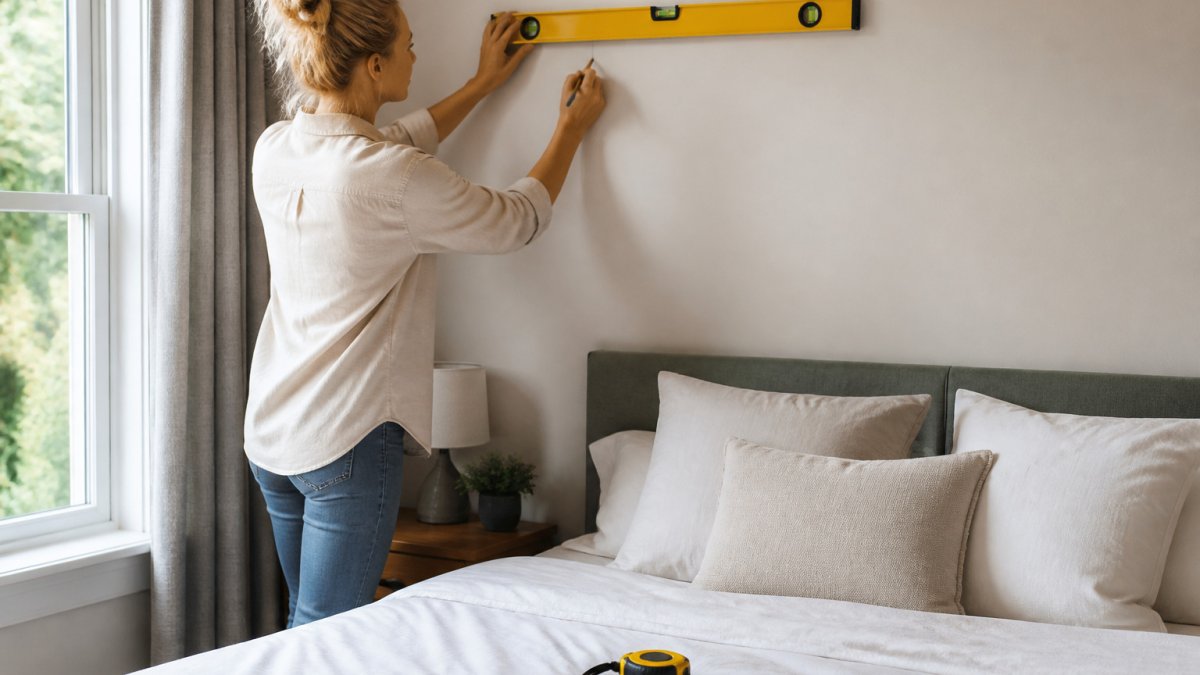
- Check the weight of the frame and glass, then choose hardware rated well above that figure
- Find a stud or use plugs rated for the weight of the piece
- Do not hang heavy art directly above where someone sleeps if you can avoid it
- Ask a second person to hold the piece while you fix the hardware
- Check the fixings after a week, as they can loosen over time
Keep a clear space below the frame so no one is struck if it shifts. If you are unsure about your wall type, ask a professional to check before you drill.
Planning a Gallery Wall Above Your Bed
A gallery wall can work above a bed if you plan it on the floor first. Lay the pieces out on a clean sheet, moving them until the arrangement feels balanced. Keep the overall group within the bed's width, and leave even gaps of about 5 to 8 centimetres between frames.
Mix sizes for interest, but keep one large piece as the anchor. A triptych often works well as that anchor, with smaller frames filling the space around it. Take a photo of the layout before you drill, so you can check it against the wall.
Booking Your Bella Leaf Studio Triptych for the Wall Above Your Bed
Pick the piece that suits your bed, measure carefully, and hang it with the steps above.
Frequently Asked Questions
Can you hang a large picture above a bed?
Yes, a large picture can hang above a bed as long as it is secured properly and sits well within the wall space. Choose a frame that is no wider than the headboard or bed, leave a gap of roughly 15 to 25 centimetres between the top of the headboard and the bottom of the frame, and use a fixing rated for the full weight of the piece. For heavier frames, locate the wall stud or use a proper anchor rather than relying on a standard plasterboard plug.
How high should art hang above a bed?
A common guideline is to place the bottom edge of the artwork about 15 to 25 centimetres above the top of the headboard or the mattress. This keeps the piece connected to the bed without crowding it. If there is no headboard, aim for the bottom of the frame to sit roughly 20 to 30 centimetres above the top of the mattress. Adjust slightly to suit the height of your ceiling and the scale of the artwork.
How do you secure a heavy picture above a bed?
Start by checking the weight of the frame and the wall type. For plasterboard, use a heavy-duty cavity fixing rated above the frame weight, or better still, fix into a timber stud. Use two hanging points rather than one to keep the frame level and reduce strain. Always double-check that the fixing is firm before resting the frame on it, and keep the bed clear of the area while you work.
